


How Clutter Affects Your Mental Health
Understanding the connection between physical mess and mental overwhelm. Why clearing your space actually helps clear your mind.

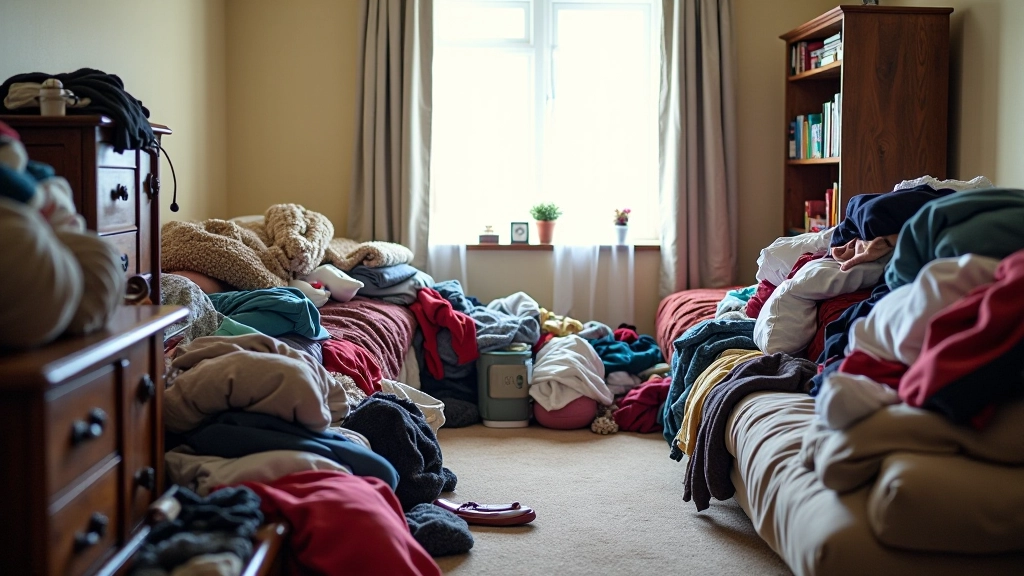
Your environment shapes how you feel. It’s not just about aesthetics — the spaces we live in directly impact our stress levels, focus, and emotional wellbeing. When clutter accumulates, it doesn’t stay confined to shelves and corners. It creeps into your mental space, adding weight to decisions you didn’t even realize you were making.
The connection between physical clutter and mental health isn’t new. Psychologists have studied this for years. What’s changed is how clear the evidence has become. Clutter increases cortisol (your stress hormone), fragments your attention, and creates a constant low-level sense of being overwhelmed. You’re not imagining that cluttered feeling — your brain is literally working harder.
The Science Behind the Clutter-Stress Connection
Your brain processes visual information constantly. Every item in your field of view requires some level of cognitive processing — even if you’re not consciously aware of it. When there’s too much visual information competing for attention, your prefrontal cortex (the part responsible for decision-making and focus) gets overloaded.
A study from UCLA’s Mindful awareness research center found that people living in cluttered homes had higher levels of cortisol throughout the day. That’s not coincidental. Your environment is literally triggering a stress response. And it’s not the kind of stress you can just ignore — it’s constant, background-level anxiety that exhausts you without you realizing why.
What’s particularly interesting? This happens regardless of whether you notice the clutter. Even if you’re used to mess, your nervous system isn’t. Your brain still has to work harder to filter out the chaos.

Decision Fatigue and the Hidden Cost of Stuff
You make thousands of decisions every day. What to wear. What to eat. Which task to prioritize. Your decision-making capacity is like a battery — once it’s drained, you can’t make good choices anymore. That’s decision fatigue.
Clutter multiplies this problem dramatically. Every item in your space is a micro-decision waiting to happen. Should you move it? Use it? Keep it? These aren’t conscious decisions, but they’re real cognitive load. By the time you face actual important choices — work problems, relationships, personal goals — your decision battery is already depleted.
“The spaces we inhabit shape the minds we develop. Clutter isn’t just a physical problem — it’s a cognitive one.”
This is why clearing one room often leads to clarity about other areas of your life. It’s not magic. It’s neuroscience. When you reduce visual complexity, you free up mental resources for what actually matters.
Educational Information
This article is for educational purposes and shares insights about the relationship between physical environments and mental wellbeing. While research supports the connection between clutter and stress, individual experiences vary. If you’re struggling with anxiety, depression, or other mental health concerns, consulting with a mental health professional is always recommended. Decluttering can be a helpful practice, but it’s one piece of overall wellbeing — not a replacement for professional support.
The Psychological Weight of “Someday”
Clutter thrives on postponement. That box of old documents you’ll sort through. The gifts you don’t like but might regret donating. The hobby supplies for projects you haven’t started yet. These aren’t just physical objects — they’re psychological anchors.
Every unfinished task, every item you’re keeping “just in case,” creates what psychologists call “open loops” in your mind. Your brain wants closure. It wants decisions to be made. When you leave things ambiguous — physically present but mentally unresolved — you’re creating constant low-level stress.
Irish homes especially tend to hold onto things with the mentality of “waste not.” There’s a cultural element to this. You keep things because throwing them away feels wrong. But keeping them comes at a cost too. It’s about finding balance — honoring the value of things while also honoring the value of your mental peace.


How Clearing Space Improves Mental Clarity
The flip side of this is encouraging. When you clear clutter, you’re not just tidying up — you’re literally giving your brain room to think. Studies show that people who declutter experience measurable improvements in focus, mood, and sleep quality within weeks.
You’ll notice it first in small ways. You spend less time looking for things. Your morning routine feels smoother. You’re not constantly scanning your space for what needs doing. Then you’ll notice bigger shifts. You sleep better because your brain isn’t processing visual chaos at night. You make better decisions because you’re not decision-fatigued. You feel lighter.
This isn’t about becoming minimalist or obsessively organized. It’s about creating an environment where your mind can rest. Where the things you keep actually serve you. Where your space reflects what matters to you right now — not what might matter someday.
Your Space, Your Mind, Your Choice
The relationship between clutter and mental health is bidirectional. Yes, clutter creates stress. But also, when you’re stressed or depressed, maintaining your space becomes harder. It’s a cycle that feeds itself.
The good news? Breaking that cycle is entirely within your control. You don’t need to renovate your home or buy organizing systems. You don’t need perfection. You just need to start clearing what doesn’t serve you. Even one small space — a single drawer, a shelf, a corner — creates a shift.
That clear space becomes proof. Proof that you can change your environment. Proof that you can make decisions about what stays and what goes. Proof that your mind responds to these changes. And that’s often enough to create momentum for more.
Ready to transform your space?
Explore our room-by-room approach to decluttering tailored for Irish homes and apartments.
Read the Room-by-Room GuideExplore More on Decluttering

Making Mindful Keep or Donate Decisions
Read Article